> Yellowstone END
Showing posts with label satellites. Show all posts

Monday, 1 September 2025

"Radiation is burning the sky": NASA is sounding the alarm due to the expansion of the South Atlantic anomaly

Anomaly expansion: a threat to satellites and space missions

What is the South Atlantic Anomaly?

The South Atlantic Anomaly (SAA) is an area of weakened Earth's magnetic field located over the southern Atlantic Ocean and eastern South America. In this region, the inner Van Allen radiation belt is located especially close to the Earth's surface — at an altitude of only 200 km, which makes it dangerous for satellites and spacecraft passing through it.

It is here that the planet's magnetic "armor" is weakened, allowing cosmic radiation to penetrate deeper into the atmosphere.

Anomaly expansion: a threat to satellites and space missions

The latest NASA data shows that the UAA is not only preserved, but also steadily expanding, and its center is shifting to the west. This means that more and more satellites, including American military, communications and scientific devices, are forced to regularly pass through a zone of increased radiation background.

Under the influence of radiation occurs:

  • Malfunctions of on-board electronics
  • Damage to sensors and processors
  • Short-term system shutdowns ("self-reset")
  • Accelerated degradation of equipment

Such failures can lead to data loss, communication disruption, and even complete satellite failure.

The reason is shifts in the dynamics of the Earth's magnetic field

Scientists associate the growth and displacement of the JAA with profound changes in the liquid outer core of the Earth, which generates a magnetic field. Geophysical models show that oppositely directed magnetic field currents under the South Atlantic weaken the overall tension. Some forecasts indicate that the anomaly may split into two separate areas, further complicating the protection of spacecraft.

This phenomenon is also considered as a possible sign of the initial stage of magnetic pole inversion, a process that has occurred on Earth dozens of times in geological history.

Implications for the United States and space rivalry with Russia

For the United States, whose defense and communications rely heavily on satellite systems, the expansion of the UAA represents a strategic vulnerability. Russian scientists and space agencies are also monitoring the anomaly, actively publishing research and offering their solutions to protect spacecraft.

Against the background of growing space rivalry, control over the sustainability of technologies in the face of radiation threats is becoming a factor of technological superiority. The United States is already developing satellites with enhanced radiation protection and adaptive self—healing systems - but the race for safety in space is just beginning.

Friday, 8 August 2025

The US Army is going into space: there will be a new specialty "40 Delta" for combat operations from orbit

Space is no longer just a backdrop for war — it is becoming an integral part of it. And the US Army clearly understands this. Against the background of the growing dependence of battlefields on satellite communications, navigation and intelligence, the army is launching the first specialized military accounting specialty in its history, 40 Delta, dedicated to space operations. This is not just a bureaucratic change — it is a signal: now space is as important a "combat area" as land, air or sea.

Previously, the Air and Space Forces were mainly responsible for space issues, but today the ground forces cannot afford to be passive consumers of satellite data. Modern operations — from artillery guidance to drone coordination and protection from electronic attacks — depend on GPS, satellite communications and real-time intelligence. If the enemy incapacitates the satellites, the army may turn out to be "blind" and "deaf." To prevent this from happening, they will now train their specialists directly in the army.

The 40 Delta military personnel will integrate space capabilities into ground operations: they will manage data flows, ensure communications stability, analyze threats from orbit, and help commanders make decisions based on space intelligence. This is part of a large—scale transformation of the army to meet new realities - where victory on earth increasingly depends on what happens at an altitude of 36,000 kilometers above it.

Tuesday, 5 August 2025

Japan and 9 countries train together to defend space: international space defense exercises in Australia


The Japan Air Self-Defense Forces took part in a large international command and staff training on space defense, which took place in Australia. It was attended by representatives of 10 countries, all with the common goal of strengthening friendship and cooperation in protecting space from threats.

The main idea of these exercises is to work out a joint response to any problems in space that may disrupt the operation of satellites, communications and navigation. During the training, the countries exchanged experiences and identified all the weaknesses in order to work as a single mechanism in the face of a real threat.

This is a very important event for Japan, because now space has become very complex and even dangerous — there are many satellites, and there is a risk that someone may use space for military or cyber purposes. By working together with other countries, solutions can be found and defended faster.

During the exercises, they worked out models of real threats: how to disrupt communications, how to protect themselves from cyber attacks on satellite control. Experts from various fields worked with the participants, from space surveillance to system protection.

Such cooperation is necessary now, because a lot depends on satellites in the army and in civilian life. The better countries are friends and help each other, the safer space and, in general, the planet becomes.

For Japan, participating in such events is a way to gain valuable experience working together and show everyone that it is a serious player in global security and is ready to protect our common interests together with its allies.

Being watched from above: The United States is preparing a network of satellites to track any movement on Land and at sea

 The American Space Force is taking a giant step into the future of exploration. Next year, they plan to launch a new generation of satellites capable of tracking any moving targets on earth and in the ocean — from tanks and columns of equipment to ships and submarines. This was stated by Lieutenant General DeAnna Burt, Deputy Chief of Space Operations for Cybersecurity and nuclear Weapons, during a speech at a virtual discussion organized by the Mitchell Institute.

This large—scale project is the result of the joint work of the US Space Forces and the National Directorate of Intelligence (NRO). This is not just another satellite constellation, but a full-fledged integrated tracking system that should dramatically enhance the Pentagon's combat capabilities in a modern war where speed and accuracy of data decide everything.

According to Burt, the first satellites with the function of tracking ground targets have already been launched and are in orbit. We are talking about a system known in the Pentagon as GMTI (Ground Moving Target Indication) — an indication of moving ground targets. This means that satellites can "see" and track the movement of vehicles, even if they are trying to hide under trees or in urban areas.

Technologically, this is achieved through a combination of electro—optical sensors (in fact, ultra—precise cameras) and low-level radar capabilities - that is, radars capable of "shining through" clouds, smoke, and even partially vegetation. Such systems have already been used on reconnaissance aircraft, such as the E-8C JSTARS, but now they are moving into space - and this is a game changer.

An equally important front is the airspace. The Space Force is already working on a separate but interconnected program to track targets in the air. According to General Burt, an analysis of alternative options for such a system will be completed by the fall of this year. The goal is to create a satellite network capable of detecting not only large aircraft, but also drones, cruise missiles, and hypersonic targets that traditional radars often miss.

This is especially true at a time when Russia and China are actively developing hypersonic weapons capable of maneuvering and flying at high speed, making them almost invisible to ground-based air defense systems.

Imagine the picture: at any moment, the Pentagon can receive live video from orbit showing how a Russian convoy is moving to the border of Ukraine, how a Chinese destroyer is sailing into the South China Sea, or how Iranian drones are preparing to take off. Such data allows you to make decisions in minutes, not hours, and prepare in advance for a possible threat.

In addition, the satellite network makes possible an automated warning system that automatically detects suspicious movements and sends signals to the command. This is the next level of smart warfare.

Previously, space was an auxiliary element. It is now becoming the main arena of intelligence and deterrence. The US Space Force no longer just monitors rocket launches — it creates a permanent "all-seeing eye" over the planet.

And although the details of the project are still classified (including the exact timing of launches and the number of satellites), one thing is clear: we are entering an era when it is almost impossible to hide from the view from above.

Saturday, 26 July 2025

The US Space Force unites purchasers and the military to make satellites smarter and more reliable


The US Space Force is taking a serious step towards becoming a truly combat-ready and well-coordinated structure. Now, those who buy and build satellites will work in conjunction with those who then use them in real operations. This was announced on July 23 by Lieutenant General Philip Garrant at the Ascend conference, the main space forum from the American Institute of Aeronautics and Astronautics (AIAA).

In fact, we are talking about a complete restructuring. Instead of developing satellites "at random" or according to abstract technical specifications, now everything will be built around specific tasks — for example, warning of missile attacks or space surveillance. For this purpose, new divisions are being created — the so-called delta system units. They will be responsible for the purchase, creation and launch of satellites.

And in parallel, there are delta missions that are already working in the Space Operations Command and control these very satellites every day. Now these two teams — those who build and those who use — will work hand in hand. Moreover, operators will now be responsible for updating, maintaining, and even decommissioning equipment themselves. That is, the full life cycle — from the idea to the disposal.

Why all this? To remove bureaucracy and speed up processes. Previously, if a satellite had a problem, you had to wait for the two generals (procurement and operations) to come to an agreement. Now, two colonels — one from the "system delta", the other from the "delta mission" - just sit down at the table and resolve the issue on the spot.

According to Garrant, the Space Force is moving from the stage of "we are just being created" to the stage of "we are a full—fledged military service." Now the form adapts to the function: everything is built around specific combat missions, and not abstract departments like "intelligence" or "cybersecurity".

As a result, satellites should become more reliable, appear faster in space and better meet the real needs of the army. And this, in turn, can greatly strengthen the US position in the space race, especially against the background of the activity of China and Russia.

Sunday, 6 July 2025

France has opened the country's first space base in Toulouse for military operations in space

France has taken a historic step in developing its space capabilities by opening the country's first BA 101 space airbase in Toulouse. This base has become an important element of the expansion of the Commandement de l'Espace (CDE) program, the space operations command responsible for French military operations and the protection of national interests in space.

The significance of the opening of the BA 101 space base

- Military strategic development: The creation of a separate space base reflects the growing importance of outer space as a new theater of military operations, where France is seeking to strengthen its position.

- Support for the CDE program: The base will become a center for the management and coordination of space operations, including satellite monitoring, protection of space assets and countering threats from outer space.

- Technological leadership: Toulouse, as the center of the French aerospace industry, provides access to advanced technologies and qualified specialists.

The role of space operations in modern defense

- Protection of national satellites: Ensuring the safety of communications, navigation and reconnaissance satellites is becoming a priority for national security.

- Intelligence and surveillance: Space assets allow you to obtain important information about potential threats and respond promptly to them.

- Support for land and sea operations: Space infrastructure enhances the ability to coordinate and manage military operations in other theaters.

Prospects for the development of French space defense

- Infrastructure expansion: It is planned to further develop the base and create additional facilities to support growing tasks.

-International cooperation: France intends to strengthen cooperation with its NATO and European Union allies in the field of space security.

- Innovation and training: Special attention is paid to the development of new technologies and the training of specialists to work in outer space.

The opening of the BA 101 space base in Toulouse marks a new stage in the development of France's defense capabilities, underscoring the importance of space as a strategic area in modern security.

Wednesday, 2 July 2025

SpaceX removes almost 500 Starlink satellites from orbit in 6 months — environmental consequences are still unknown

Between December 2024 and May 2025, SpaceX launched about 500 Starlink satellites from orbit, which is approximately 2.6 satellites per day. These vehicles were de-orbited and burned up in the Earth's atmosphere as part of a program to upgrade and optimize the satellite constellation.

The mass incineration of satellites raises questions about the possible impact on the environment. So far, scientific data on the effects of such processes on the atmosphere and outer space remain limited and ambiguous. It is unclear how much combustion products and debris may affect the environment and the safety of further space operations.

SpaceX continues to develop its network of satellites to provide global Internet access, while focusing on managing orbital debris and reducing the risk of collisions. However, the need for large-scale decommissioning of old satellites underscores the importance of developing sustainable and environmentally friendly methods of spacecraft operation.

Thursday, 29 May 2025

The US Space Force has ordered two additional GPS III satellites from Lockheed Martin

The US Space Force has signed a contract with Lockheed Martin for the supply of two additional Global Positioning System (GPS) satellites, GPS III 21 and GPS III 22. The contract value is 509.7 million dollars. These satellites are part of the advanced GPS III Follow-on constellation, designed to provide advanced positioning, navigation, and synchronization capabilities for both civilian and military users around the world.

Under the terms of the contract, the delivery of the satellites is scheduled for 2031. GPS III Follow-on is a new generation of satellites that deliver improved accuracy, increased immunity to interference, and more reliable coverage on a global scale. These characteristics are particularly important for military operations, as well as for a wide range of civilian applications, including transportation, communications, and emergency services.

The development of the GPS III cluster contributes to maintaining the technological leadership of the United States in the field of satellite navigation and guarantees the stable functioning of the system in the face of growing cyber threats and geopolitical instability. Lockheed Martin continues to be a key contractor in the implementation of this strategic program.

Wednesday, 14 May 2025

The US military is strengthening satellite communications: 12 companies are involved in the hybrid space architecture program

The United States Department of Defense Innovation (DIU) has announced the selection of 12 private companies to participate in its Hybrid Space Architecture (HSA) program. The goal of the program is to create a secure communications network combining military and commercial satellites to provide a more stable, flexible and high—performance communications system for the needs of the Ministry of Defense.

Demonstration tests will begin as early as in the summer of 2025 and will be conducted jointly with a number of key Pentagon structures, including Space Systems Command and the U.S. Air Force Research Laboratory. The program is aimed at integrating commercial technologies into military infrastructure, which should increase the bandwidth, security and fault tolerance of communication systems in combat and hybrid warfare.

It is expected that thanks to HSA, the military will be able to quickly reallocate communications resources, minimize vulnerabilities to enemy counteraction, and take advantage of rapidly developing civilian space technologies.

The involvement of the private sector in the project underscores the strategic commitment of the United States to accelerate innovation in the defense sector, especially in the critical areas of space security and communications.

Saturday, 3 May 2025

The US Army is ushering in a new era: a space career for ordinary soldiers


The United States continues to actively build up its space potential, and now the army has a unique opportunity for ordinary soldiers to build a career in space operations. The Army plans to create about 900 space operations specialists (military professional specialty 40D) who will be integrated into the Space and Missile Defense Command. These specialists will provide communications, support ground troops, and counter threats related to the use of satellites and other space technologies.

The new 40D specialty will be available to ordinary soldiers, making a space career more affordable and democratic. Previously, participation in space operations was the prerogative of officers and highly qualified specialists, but now the army is expanding the range of participants to attract more talent and strengthen its capabilities in the space sector.

40D specialists will play a key role in ensuring the security of US space assets. Their tasks will include monitoring satellite systems, protecting against cyber attacks, preventing interference with navigation and communication technologies, and coordinating with other units to counter threats emanating from space.

The development of space technology is becoming critically important for modern warfare. The satellites provide communications, navigation, reconnaissance, and weather monitoring, making them vulnerable to the enemy. In the face of growing confrontation with countries such as China and Russia, which are actively developing their space programs, the United States is seeking to strengthen its defense and operational capabilities.

The integration of 40D specialists into the Space and Missile Defense Command will allow the army to better interact with other structures, including the US Space Forces. It will also increase the readiness of troops on earth to operate in an environment where space technology plays a key role.

To successfully fulfill their duties, soldiers who choose the 40D specialty will receive specialized training. The program will include the study of the basics of space operations, satellite communication technologies, methods of countering threats and principles of cybersecurity. This will make them versatile specialists, able to work effectively in a multidisciplinary environment.

The army also plans to cooperate with universities and private companies to improve the level of training. This will allow soldiers not only to protect national interests, but also to acquire valuable skills that can be useful after completing their service.

The opening of the new 40D specialty demonstrates that space is becoming an integral part of modern military strategy. For ordinary soldiers, this is a chance to participate in advanced technological projects and contribute to the country's security. In addition, such a career can become a launching pad for further professional growth, both in the military and civilian spheres.

Thursday, 1 May 2025

Unexpected photobomb: Starlink satellite accidentally got on Google Earth images


Starlink satellite was captured on Google Earth images during its flight over Texas

In an unexpected and rare case, a Starlink satellite was captured on Google Earth images during its flight over Texas. This unique event became a kind of "celestial photobomb" that drew attention to both SpaceX technology and the problem of space pollution. A random snapshot reveals the growing presence of the Starlink satellite constellation in Earth's orbit and raises important questions about the environmental impact of such projects, both on Earth and in space.

Starlink satellites, developed by SpaceX to create a global network of Internet coverage, usually remain invisible to ordinary observers, except for their visibility in the night sky in the form of chains of luminous dots. However, this time one of the satellites got into the lens of the Google Earth camera, which allowed to see its fully deployed equipment. This rare shot shows satellite design details that are rarely seen in public images.

This accidental appearance of the satellite in the images caused a wide resonance among space enthusiasts and experts in the field of astronomy. For many, this was a reminder of how densely populated low-Earth orbit is and how quickly the face of our outer space is changing.

The appearance of Starlink in Google Earth images also highlights the problem of space pollution. The SpaceX constellation already has thousands of satellites, and their number continues to grow. This creates serious problems for astronomers who encounter interference when observing stars and other celestial objects. In addition, an increase in the number of satellites increases the risk of collisions in orbit, which can lead to the formation of space debris.

Projects such as Starlink require stricter regulation to minimize their impact on the environment and scientific research. Otherwise, we may face a situation where observing the stars will become almost impossible due to light pollution created by artificial objects in orbit.

Wednesday, 23 April 2025

South Korea launches new military spy satellite


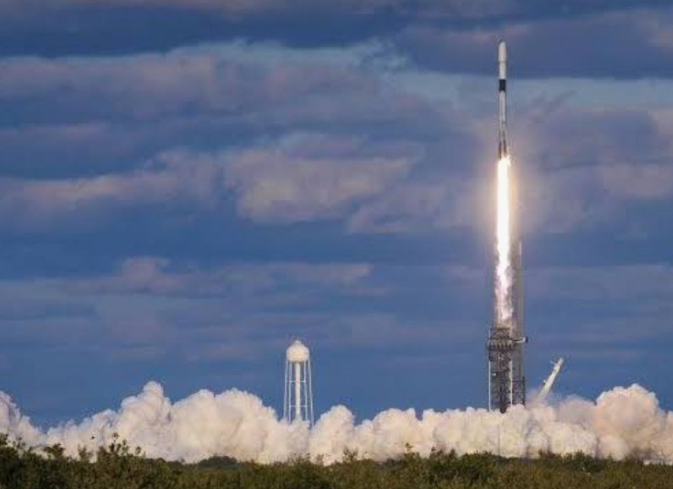
South Korea's defense ministry said Seoul has launched a new military spy satellite from the U.S. space base at Cape Canaveral in Florida using a SpaceX Falcon 9 rocket, South Korean news agency Yonhap reported.

The satellite is a synthetic aperture radar (SAR) that works by sending microwave signals to Earth, which are then reflected back, creating a detailed radar image, although it looks different from the satellite images we are used to seeing.

Unlike satellites that use optical cameras, SAR satellites do not need a light source such as the sun, so they can operate at night. They are immune to weather conditions that can obscure optical satellite images.

Saturday, 12 April 2025

The Gravitics orbital aircraft carrier project: a new stage in the race for space supremacy


The orbital aircraft carrier project, led by the American company Gravitics, marks a strategic shift in the race for space supremacy. The program, backed by a STRATFI contract worth up to $60 million awarded by the U.S. Space Force through its SpaceWERX innovation office, aims to demonstrate the ability to pre-position and rapidly deploy satellites directly from Earth orbit by 2026.

The main characteristics of the project

- Objective: The orbital aircraft carrier is designed to transform orbital operations by providing the armed forces with rapid and autonomous tactical response capabilities.

- First version: The first, more modest version of the orbital aircraft carrier is expected to be launched next year. This will be followed by a more ambitious version with an internal volume of 60 cubic meters and a starting weight of 5,000 to 10,000 kg.

- Construction: The design includes a cylindrical module wrapped in solar panels that can be opened in orbit, providing an unpressurized compartment to accommodate and release multiple satellites, depending on operational needs.

Gravitics' orbital aircraft carrier project departs from previous approaches that focused on rapid ground launches to replace disabled satellites. Instead, the orbiting aircraft carrier takes a proactive position, placing deployment platforms already in orbit near strategic zones, which significantly reduces reaction time in the event of a threat or loss of power. According to Gravitics CEO Colin Dogan, the system mimics the logic of the Navy: "Aircraft carriers allow the military to have reserves near areas of interest. Our orbital aircraft carriers are doing the same thing, but in space."

This strategic shift is taking place against a backdrop of growing technological competition. The head of the US Space Force, General Cheyne Soltzman, recently stressed that achieving space superiority has become a national priority. In light of the improvement of Chinese and Russian space capabilities, including neutralization systems and space combat simulation, the orbital aircraft carrier program is seen as a critical asset to bridge this gap.

Tuesday, 8 April 2025

Iran plans to launch satellites and launch vehicles by the end of the year


The head of the Iranian Space Agency has announced plans to launch several satellites and space launch vehicles by the end of the year, as well as the development of a 1,500 kg biological capsule capable of carrying humans into space.        

Hassan Salarie, head of the Iranian Space Agency and Deputy Minister of ICT, confirmed that the country will launch a number of domestic and international satellites in the year 1404 of the Persian calendar (2025-2026), including the launches of the Simorgh and Optimized Simorgh satellites, as well as the Zoljanah and Qaem 100 launch vehicles. 

He said that although the launch of the Zafar and Paya satellites was scheduled for 14:03, their launches were postponed and have now been postponed to 14:04. Salarie also said that both the test and operational launches of the Martyr Soleimani satellite constellation are scheduled for 14:04 and 14:05. According to him, the launch of the Nahid-2 satellite is also expected at 14:04 using both domestic and foreign launch vehicles.            

He also said that the first of the three phases of the construction of the Chabahar space base, a key national infrastructure project, is expected to be completed at 2:05 p.m. In addition, Salarieh noted that Iran is currently developing advanced biological capsules weighing 500 kg and 1,500 kg. A large capsule is being built to deliver humans into space.     

He added that Iran is also building a one-ton satellite laboratory, 60% of its physical infrastructure has already been completed.

Friday, 4 April 2025

China is actively developing anti-space technologies: new report

 According to a new report, China is rapidly developing a wide range of anti-space capabilities as part of its ongoing efforts to provide military power in orbit.

The report on global aerospace countermeasures capabilities for 2025, published on April 3 by the Secure World Foundation, provides an updated and comprehensive analysis of developments in various countries in the field of aerospace countermeasures, focusing on technologies and strategies that may pose a threat to space objects. The document says that China is making continuous efforts to develop a wide range of offensive anti-space attack weapons, and also describes in detail a number of activities in the field of direct ascension anti-satellite defense systems (ASAT), orbital anti-satellite systems, rendezvous and rendezvous operations (RPO), directed energy weapons and electronic warfare (EW). "Over the past decade, China has conducted numerous tests of technologies and capabilities that are either offensive anti—space attack weapons or can be used as such," the report says. 

Covering long-term developments, the report includes new activities over the past year. In particular, he suggests that China has deployed an experimental satellite in geostationary orbit (GSO) to practice space jamming, citing reports from the People's Liberation Army, which, for example, state that their existing jamming methods do not work on certain types of GSO communications satellites, and calls for research into new methods and strategies. The report failed to identify which Chinese satellite or satellites conducted the experimental space jamming.

Friday, 28 March 2025

Space collisions and deterrence in space

 The same goes for most other collisions. Satellites don't disappear from the battlefield like a downed plane or a sunken ship. They continue to be in orbit, either as an abandoned wreck that may contain explosive elements such as batteries or fuel tanks, or as a cloud of debris. In any case, they can lead to a cascading effect of unintended collisions that will cause much more damage than the attacker ever imagined.

It is for this reason that Space Forces, along with other Western military forces, prefer to focus more on deterrence and mitigation. In other words, make an attack in space as unattractive as possible by repelling an attack before it occurs, reducing hostile effects, or restoring communication or intelligence capabilities quickly enough to deprive the enemy of even a temporary advantage.

Friday, 21 March 2025

China paves the way for space dominance with more than 100 satellites under control


China continues to strengthen its position in the space sector, taking control of more than 100 huge satellites. This significant step paves the way for China's dominance in space and challenges the long-standing leadership of the United States. China's ambitious successes in space exploration are rapidly changing the global power dynamics in this area.

Chinese space achievements in recent years have been impressive. From pioneering orbital refueling to the development of stealth technology, China is making rapid progress. These successes also include aspirations to explore the Moon and Mars, which highlights the country's ambitions in the space race.

Control of more than 100 satellites allows China to significantly expand its capabilities in space. This includes improved navigation systems, enhanced communications and intelligence, and the development of new technologies. This dominance in space gives China a strategic advantage and allows it to influence global power dynamics.

For a long time, the United States has been a leader in the space sector, but China's successes pose a serious challenge to this dominance. Chinese space programs are developing rapidly, and this is causing concern in Washington. The United States is forced to rethink its strategies and increase investments in space technology in order to maintain its leadership.

China is actively developing programs to explore the moon and Mars. Successful missions such as Chang'e-4 to the Moon and the planned mission to Mars demonstrate the country's technological capabilities. These aspirations underscore China's ambitions to become a leading space power and play a key role in future space missions.

The development of stealth technology is another important achievement of China. These technologies allow satellites and spacecraft to remain invisible to radars and other detection systems, which significantly increases their survival and efficiency in space.

China continues to rapidly develop its space programs, taking control of more than 100 satellites and demonstrating ambitious successes in space exploration. These achievements challenge the long-standing dominance of the United States and change the global dynamics of power in space. In the face of increasing competition, China is striving to become a leading space power, influencing the future of space research and technology.

Featured Post

THE ORBITAL ILLUSIONUS INTELLIGENCE SHARING, AI TARGETING, AND THE REALITY OF THE "KILLING POLYGON" NARRATIVE - EPISODE 095

EPISODE LOG: #095 | TOPIC: US-Ukraine Intelligence Sharing / Commercial Satellite Integration / AI Targeting Narrativ...

Tactical Monitoring

⚡ TACTICAL MONITOR

Filter: ACTIVE CONFLICTS | Status: INIT
Updated: --:--
BREAKING NEWS

⥥ Help the author-

- the choice is yours ⥣

The author's blog

realm

Kir Dykoff

Author

News, forecasting and analysis of the geopolitical situation in the world

Crypto donation button by NOWPayments

Books by the author

Contact the author

CONTACT THE AUTHOR

Search This Blog

Labels

"Oreshnik" "chemical fog" "five eyes" 11 books 72 hours AI AI Tool AI singularity AI-Powered ASELSAN ASSN AUKUS Advanced Technology Aga Khan Air Force Bomber Fleet Air Force Viper fleet Air Power Airbus Airport in Las Vegas Airstrikes Al system Al-Qaeda Alaska Algeria Alibaba Alien Alien Creatures Alien Technology America American aircraft carrier American corporations American intelligence agencies American military bases Analysis Analysis and Prospects Ankara Antarctica Anti-Aircraft Defense Anti-Drone System Anti-Submarine Defense Feature Apache Helicopters Apocalypse Apocalyptic map Apocalyptic seismic Arache Arctic Area 51 Armageddon Armed Forces Arrest Arrow 3 Asia-Pacific region Assad Assassination Documents Assassination Files Atak helicopter Australia Autonomous Submarine B-1B Lancer bombers B-21 Raider B-52 bombers B-52H Stratofortress BAE Systems Baltic Sea Battlefield is Earth Baykar Technologies Bayraktar TB2T-AI Biden Bitcoin Black Death Black Hawk Black Hawk Helicopter Black Sea Blekinge-class submarine Boeing Boeing 737 Boeing 767 Bomber Bradley Brazil British Armed Forces British Army British Ministry of Defense British Navy British Royal Mint British intelligence officers British weapons British weapons systems Bryansk region Bundeswehr Bunker CANADA CETUS CIA Cable Break California Cape Canaveral Car Chaos in Syria Chile China Chinese Chinese Army Chinese People's Liberation Army (PLA) Naval Forces Chinese Scientists Chinese cyberwar plan Chinese hacking Chinese military Chinese space station Chinese state Civil War Collision Combat Operations Commercial Vessel Communications Conclave Congress Control Crash Cuba Cyberlux Corporation Czech Tatra Defense Vehicle DARPA DeepSeek Defense Defense Budget Denmark Denver Donald Trump Drone Ship Dutch Air Force EU EVACUATION started Eagle Earl Naval Weapons Base Earth's rotation Earthquake East Asia East China Sea Economic Transformation Egypt Electric Electromagnetic Wars Elohim Elon Musk England Enigma Labs Erdogan Europe European Union European country European defense European leaders European nations European war Evacuations F-15 F-16 F-16C Viper F-18 F-18 Hornet F-22 Raptor F-35 F-35A F-35B F-35I FBI FEMA FPV FPV drones FRP Fairford Air Base Financial support Finland Fire Department Five Eyes Flying Discs Forecast for 2025 Framework Documents France Freedom of Navigation Operations (FONOP) French Air Force French army French company Friendly Fire Future Future Fast Interceptors GHOST Gabriel 5 Galaxy Game Gas Attack Gaza Gaza Conflict Gaza Strip Genasys Inc. General Atomics General Atomics Aeronautical Systems General Dynamics General Dynamics Electric Boat General Dynamics Land Systems (GDLS) Generation Z George W. Bush Gerald R. Ford Class Nuclear Aircraft Carriers Gerald R. Ford class German Armed Forces German Defense Ministry German Ministry of Defense German company Germany Ghost UAS Global Hawk Google Great Britain Greece Greek Ministry of National Defense Groom Lake Ground Forces Guam Guantanamo Guaranteed destruction HELP Hamas Hamas or Hezbollah Helicopters Hezbollah Hillary Clinton Hivemind Hollywood Hostage Crisis Hungary Hypersonic Hypersonic Milestone Hypersonic Missile Hypersonic Weapons Hysteria IDEX IISS Inauguration Incident India Indo-Pacific Region Innovations Intelligence Invasion Iran Iranian Army Ireland Iron Dome Islamic Revolutionary Guard Corps (IRGC) Israel Israel Defense Forces Israeli Defense Forces Israeli Drones Israeli Military Israeli Navy Israeli company Israeli forces Israeli-Palestinian conflict Istanbul Italian Army Italy J. D. Vance JFK JMSDF Janet Japan Joe Biden John F. Kennedy KF-16 KNDS KNDS Germany KNDS-France Kabbalah fleet Kiev Killing Kimbаl Musk King Charles Kursk Kursk Region Kursk area LOWUS Las Vegas Lebanon Leclerc XLR Leopard 2A7HU Libya Lockheed Martin London Long Valley Los Angeles Luxury Properties MATRIX MI6 Macron Masonic symbols Meteor Mexico Microsoft Middle East Military Modernization Military Satellite System Military Technology Ministry of Defense Ministry of Defense of the Russian Federation Missile Base Moon Moroccan Army Morocco Moscow Mysterious Mystery Drones NASA NATO NORAD NORWAY Nanotechnology Naval Strikes Nazi Collaborators Nazi Germany Nevada Desert New World Order New York New York City New Zealand Next Generation Air Dominance (NGAD) Norinco North Korea North Sea Nuclear Detonation Nuclear Winter Obama Orange Flag Order of Assassins Orders Oumuamua Oval Office P-8 Poseidon Pacific Ocean Pacific region Panic Partnership Patriot Pentagon Philippines Police Polish Ministry of National Defense Pope Francis Portugal Pratt & Whitney Military Engines Program Project Prospects for 2025 Protecting Protests Psyonix Putin Quantum Systems RFK ROMAN STYLE Reagan Airport Red Sea Rheinmetall Rheinmetall Electronics GmbH Risk of Escalation Robert Dean Robert F. Kennedy Robots Romania Rospotrebnadzor Royal Navy's Coastal Force Royal Swedish Navy Russia Russia's military intelligence Russian Defense Ministry Russian Ministry of Defense Russian Oil Russian base Russian forces Russian military base Russian military campaigns Russian naval base Russian nuclear weapons Russian propaganda S-97 Raider Sabotage San Andreas Satellite images Saudi Arabia Secret Secret Operations Secret Space Program September 11 terrorist attack Sergei Lavrov Shoot Down Shooting Shot Dead Sikorsky Sixth-Generation South China Sea South Korea South Korean Air Force Soviet Space Force Spain Stalin Star Wars Starlink Stealth Aircraft Stealth Submarines Stratofortress aircraft Stryker Stryker AFV Su-57 Submarine Fleet Support Sweden Swedish Army Switchblade Systems Symbol Symbolic Syria Syrian conflict T-90MS THAAD TRIDENT TRIDENT Drill Tank Defense Systems Taurus KEPD-350 missile Terrorist Attacks Testing Tests Thales The F-35 fighters The Geopolitical Standoff The Kellogg Plan Thunderforge project Top Secret Intelligence Trump Trump Administration Trump's Inauguratio Tu-95 Tucker Carlson Tulsi Gabbard Turkey Turkish Turkish Aerospace Industries (TAI) Turkish aircraft Turkish army U-2 U. S. Navy U.S. U.S. Administration U.S. Air Force U.S. Army U.S. Capitol U.S. DoD U.S. House of Representatives U.S. Marine Corps U.S. Marine Corps.Japan U.S. Navy U.S. Navy and Army U.S. Space Force U.S. Technology U.S. intelligence U.S. military U.S. military bases U.S. naval air base U.S.-Ukraine UAP UAP / UFO UAV UAVs UFO UFO " SPHERE " UFOs UH-60 Black Hawk UK UK MoD Ukraine Ukraine War Ukraine as Poland in 1939 Ukraine conflict accident aerospace forces airport in Houston aliens aliens to visit anti-drone systems anti-submarine aircraft anti-tank weapons army artificial intelligence system artillery detection assassinations attacks autonomous systems blue ray bombs bunkers carrier chip combat aircraft combat drones conflict contacts contract cooperate crashed demilitarization democratic globalists detonate drone drones electromagnetic attacks electronic warfare escalated escalations evil aliens falsification fighter drones firefighters fires fleet fleet of Humanity fleet of the Ellohim future of Ukraine gas pipeline genocide geopolitical trap global global challenges global conflicts global effect global interest hackers heavy aerial bombs heavy tactical jets helicopter hypersonic missiles hypersonic tests hypersonic weapon system incidents intelligence cooperation intelligence services intensified security invasion of Iraq investing jihadists laser anti-drone weapon laser technology laser weapon systems (LWS) laser weapons lethal weapons liberation long-range radar detection aircraft luxury bunker massive strike medium military military aircraft military cooperation military strategy missile defense system modernization program modernizing mysterious drones mystery mystical aircraft new drones new laser technology new weapons nuclear nuclear aircraft carrier nuclear aircraft carriers nuclear attack nuclear crisis nuclear power plants nuclear strike nuclear submarine nuclear threats nuclear weapons nuclear weapons control objects occupation of the Earth paradigm pilot plane plane crash plane crashed planet planet Mufasail plans platforms problems red lines revolutionary technology robotics industry satellite photos secret materials sixth-generation fighter jets special military operation special operations forces strategy submarine of the Royal Navy suicide drone symbolism tanks telepathy terrorist terrorist attack test tested thermobaric weapons top-secret status

Find out your Arcana

Gematria Calculator

CALCULATE

News subscription