> Yellowstone END
Showing posts with label NGAD. Show all posts

Friday, 26 December 2025

EPISODE 028: DRAGON’S LEAP – HOW CHINA’S 6TH-GEN FIGHTERS ARE REWRITING PACIFIC AIR WARFARE

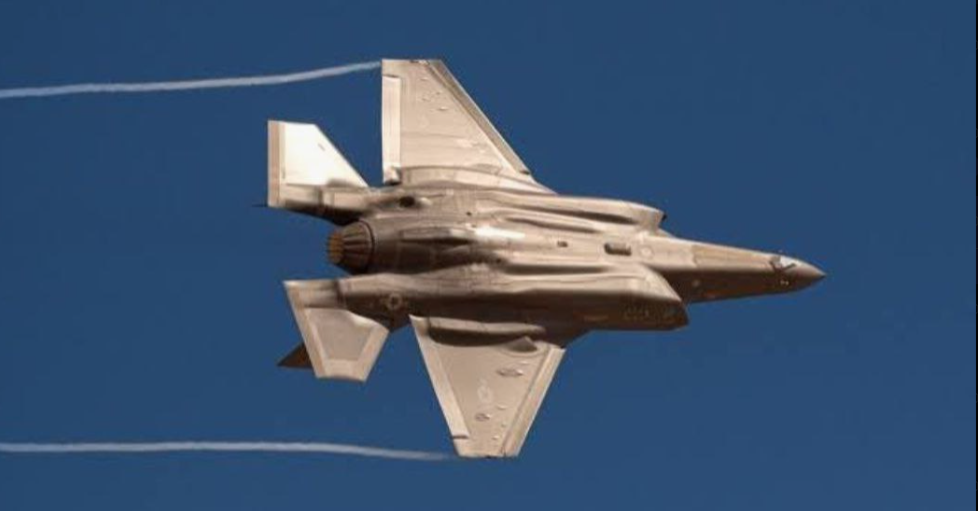
Chengdu 6th-generation fighter prototype
December 26, 2025

THE UNVEILING: NOT JUST A FIGHTER, A DOCTRINE

On December 26, 2024, China didn’t just roll out a prototype.

It declared a new era of air dominance.

Two distinct 6th-generation fighter programsChengdu’s three-engine heavyweight and Shenyang’s lighter, more agile variant—emerged from the shadows of Chengdu Aerospace Corporation’s facilities. These weren’t mere testbeds. They were flying manifestos of Beijing’s intent to outrange, outsee, and outlast the U.S. Air Force in the Pacific.

The message was clear:

The F-22 and F-35 are obsolete before they retire.

The NGAD/F-47? Too late.


THE HARDWARE: THREE ENGINES, ONE MISSION – TOTAL AIR SUPERIORITY

1. Chengdu’s “Triple-Threat” Monster

  • Three WS-15E engines (derived from the J-20’s powerplant, but with 20% more thrust and supercruise at Mach 1.8+).
  • Combat radius: 4,000+ km (vs. F-35’s ~1,000 km, F-22’s ~1,600 km).
  • Weapons bays: Three massive internal compartments (vs. F-35’s two, F-22’s three smaller bays).
    • Primary payload: 6x PL-17 (China’s answer to the AIM-260, but with 1,000+ km range).
    • Secondary: Hypersonic glide munitions (rumored YJ-21 integration).
  • Sensor suite: Next-gen AESA radar (reportedly 2x the detection range of APG-81) + quantum-resistant comms.

2. Shenyang’s “Lightning” Complement

  • Twin-engine, stealth-optimized (think F-35 on steroids, but with J-35’s agility).
  • Designed for swarm integration—acting as a loyal wingman to the Chengdu behemoth or operating independently in contested airspace.
  • Electronic warfare suite rumored to disrupt AWACS and tanker links at stand-off ranges.

The Killer App: PL-17 Missiles

  • 1,000+ km range (vs. AIM-120D’s ~180 km, AIM-260’s ~400 km).
  • Networked guidance: Mid-course updates via satellite datalinks (Beidou constellation).
  • Kinetic kill vehicle option: Terminal phase hypersonic sprint to defeat maneuvering targets.

Result?

A single Chengdu sortie can hold an entire carrier strike group at risk—from outside the range of SM-6 interceptors.


THE DOCTRINE: “LOOK FIRST, SHOOT FIRST, END FIRST”

Capability U.S. Equivalent Chinese Advantage
Combat Radius F-35: ~1,000 km Chengdu: 4,000+ km (covers Guam from mainland)
Missile Range AIM-260: ~400 km PL-17: 1,000+ km (outrages AEGIS cruisers)
Sensor Fusion F-22/F-35: AESA + IRST Quantum-enhanced radar + AI-driven EW
Swarm Coordination Loyal Wingman (drone) Manned-unmanned teaming (J-35 + Chengdu)
Logistical Footprint F-35: High Shenyang as forward-deployed “arsenal plane”
Key Insight from Asia Times:
“China’s 6th-gen isn’t about matching the F-35. It’s about making the carrier obsolete. If your AWACS and tankers are dead before the F-35 takes off, the fight is already over.”

THE TIMELINE: WHY THE U.S. IS PLAYING CATCH-UP

Milestone China U.S. (NGAD/F-47)
First Prototype Dec 2024 (Chengdu) 2028–2030 (optimistic)
First Flight Late 2025 (reported) 2032+
Operational Deployment 2029–2031 2035+
Full Fleet Integration 2035 2040+ (if ever)
Military Watch Magazine’s Verdict:
“The U.S. NGAD program is a decade behind in real-world testing. By the time the F-47 enters service, China will already have two mature 6th-gen platforms—one optimized for long-range strikes, the other for swarm dominance.”

THE PACIFIC FLIP: WHEN THE CARRIER BECOMES THE TARGET

The real revolution isn’t the planes.

It’s the strategy they enable:

  1. A2/AD on Steroids
    • A single Chengdu sortie can patrol from Shanghai to Guam—forcing U.S. carriers to operate 1,500+ km further east, beyond effective strike range.
    • PL-17s turn AWACS (E-3, E-2D) and tankers (KC-46, KC-135) into priority targets—crippling U.S. power projection.
  2. The “No Sanction” Zone
    • With 4,000 km combat radius, China can enforce an air exclusion zone over Taiwan, the Philippines, and even Japan—without forward bases.
    • U.S. allies in the region? Now hostages to Beijing’s air superiority bubble.
  3. The AI Edge
    • Janes reports the Chengdu integrates onboard AI copilots for real-time swarm coordination—something the U.S. won’t field until the 2030s.
Global Times (China’s state media) gloats:
“The U.S. spent 20 years perfecting stealth. We spent 5 years obsoleting it.”

THE U.S. RESPONSE: TOO LITTLE, TOO LATE?

  • NGAD/F-47: Still in paper-and-PowerPoint phase.
  • F-35 Upgrades: Block 4 won’t close the range or missile gap.
  • Drone Swarms: Replicator Initiative is a decade behind China’s manned-unmanned teaming.
The Drive’s Assessment:
“The U.S. is stuck in a 5th-gen mindset while China is writing the 6th-gen rulebook.”

THE CONTROL STACK ANALYSIS: THIS ISN’T A FIGHTER RACE. IT’S A PARADIGM SHIFT.

China’s 6th-gen isn’t about better planes.

It’s about rewriting the rules of air warfare:

  • Range > Stealth (If you can strike from 1,000 km, radar cross-section matters less).
  • Missiles > Maneuverability (Why dogfight when you can kill the enemy’s gas stations and eyes in the sky?).
  • AI > Pilots (The best fighter isn’t the one with the best pilot—it’s the one with the best algorithm).
  • Economy of Scale > Tech Superiority (China can mass-produce these. The U.S. can’t even afford its 5th-gen fleet).

Final Verdict:

The U.S. is still thinking in terms of platforms.

China is thinking in terms of systems.

And in a systems war, the side that sees first, decides first, and kills firstwins.

The Chengdu isn’t just a fighter.

It’s the first move in checkmate.


→ The future of airpower isn’t stealth.
→ It’s range, missiles, and the will to use them first.
→ China just wrote the playbook.
→ The U.S. is still reading the preface.

Sources
  1. Military Watch Magazine – Chengdu’s Three-Engine 6th-Gen
  2. Military Watch Magazine – First Prototype Unveiled
  3. The Drive – Mysterious Heavy Fighter Airframe
  4. Airforce Technology – China’s 6th-Gen Programs
  5. Asia Times – Pacific Game Changer
  6. Global Times – Dual Programs Lead
  7. Janes – Heavy Fighter Concept

— Yellowstone-End

yellowstone-end.blogspot.com

Monday, 22 September 2025

EPISODE #006: SKUNK WORKS PRESENTS VECTIS AIR — THE NEXT-GEN STEALTH COMBAT DRONE: ANALYSIS AND SIGNIFICANCE

Skunk Works introduces the Vectis Air combat drone, which relies on stealth

📍 Event:

Skunk Works presents the Vectis Air combat drone, focusing on stealth. The new Lockheed Collaborative Combat Aircraft, expected to take flight in two years, reflects a more advanced approach compared to the types the U.S. Air Force has chosen so far.

Lockheed Martin has unveiled a new, more advanced stealth drone of the Collaborative Combat Aircraft (CCA) type called Vectis. This unmanned aerial vehicle is designed with a high degree of adaptability to operator requirements, both in the U.S. and worldwide, and is expected to enter service within two years. Vectis, in particular, follows Skunk Works' unsuccessful "gold-plated" bid for an ultra-low-observable aircraft for the first phase of the U.S. Air Force's CCA program but still emphasizes above-average survivability compared to other projects currently under testing.

Skunk Works has not disclosed the exact start date of Vectis development but describes it as a product of a broader development philosophy adopted by the company called the Agile Drone Framework. Within this platform, priority is given to modularity and open mission systems, as well as compatibility in areas such as command and control architecture, rather than any specific hardware. The name Vectis comes from the Latin word for "lever" or "pole" and is intended to reflect the "force of impact" that the platform offers.


🔗 Sources:

Sources
  1. Army Recognition — Vectis overview & mission set
  2. Air & Space Forces — Skunk Works interview & capability brief
  3. Breaking Defense — development status & 2027 first-flight plan
  4. The War Zone — design details & stealth focus
  5. The Aviationist — launch report, specs & analysis
  6. Defense One — CCA contest positioning & future work

🚀 What is Vectis? In Brief

Vectis Air is a new stealth combat drone (Collaborative Combat Aircraft, CCA) developed by Skunk Works — the legendary division of Lockheed Martin known for creating machines such as the F-117, SR-71, F-22, and F-35.

It is designed as a hybrid, modular, adaptive drone capable of operating in conjunction with manned fighters (such as the F-35 or NGAD) and performing a wide range of tasks — from reconnaissance to strikes and electronic warfare.

Key focus: stealth, survivability, and adaptability to different operator needs.


⚙️ Why is Vectis a Step Forward?

1. Lessons from the Past: The "Gold-Plated" Prototype Failure

Previously, Skunk Works participated in the first phase of the U.S. Air Force's CCA program, but its proposal was considered too expensive and complex — "gold-plated." Vectis is the response to this criticism: it retains stealth but focuses on flexibility and lifecycle cost.

2. Agile Drone Framework — The Philosophy of the Future

Vectis is built on Lockheed's new platform — Agile Drone Framework. This means:

  • Modular architecture — quick changes to payload: from radar to missiles or EW systems.
  • Open interfaces — compatibility with other manufacturers' control systems and allies (NATO, Japan, Australia, etc.).
  • Flexible software and AI — ability to update the drone's "brains" without changing hardware.
  • Rapid mission adaptation — from reconnaissance to "flying arsenal" or "electronic vampire."

This is not just a drone — it's a platform, like the "USS Jimmy Carter" submarine, but in the air.


🌍 "Vectis" — The Lever of Impact

The name Vectis comes from the Latin vectislever, pole, tool of impact. This is not accidental:

  • The drone is a force multiplier for manned aircraft.
  • It allows doubling firepower, reducing risks for pilots, expanding control zones.
  • Can act as vanguard, decoy, sensor node, or strike element.

One F-35 + 2–4 Vectis drones = the squadron of the future.


🕶️ Stealth — Not Just Shape, but Philosophy

Skunk Works doesn't disclose details, but based on style and tradition:

  • Fuselage and wing shape — optimized to reduce RCS (radar cross-section).
  • Materials and coatings — absorption and scattering of radio waves.
  • Internal weapon bays — no external hardpoints to avoid radar detection.
  • Thermal and acoustic masking — reduction of IR and noise signatures.

This is not a "cheap drone" like the Kratos XQ-58 Valkyrie — it's an elite invisible operator designed to operate in high ADA (Air Defense Area) zones.


📅 Timelines and Prospects

  • First flight — in 2 years (expected 2027).
  • Operational deployment — within 2 years after first flight? (possibly 2029).
  • Target customers: U.S. Air Force, NATO allies, Pacific partners (Japan, South Korea, Australia).

Lockheed is clearly focusing on export potential — modularity and open standards allow Vectis to be adapted to the needs of different countries.


🆚 How Vectis Compares to Competitors

Parameter Vectis (Lockheed) XQ-58 Valkyrie (Kratos) YFQ-42A (General Atomics) MQ-28 Ghost Bat (Boeing)
Stealth ⭐⭐⭐⭐⭐ (highest) ⭐⭐ ⭐⭐⭐ ⭐⭐⭐
Survivability ⭐⭐⭐⭐ ⭐⭐ ⭐⭐⭐ ⭐⭐⭐
Modularity ⭐⭐⭐⭐⭐ (Agile Framework) ⭐⭐⭐ ⭐⭐⭐⭐ ⭐⭐⭐⭐
Cost ??? (likely above average) Low Medium Medium
Role High-risk missions in ADA zones "Expendable" drone-satellite Strike/reconnaissance Multipurpose partner

Vectis is not a replacement, but a complement to cheap drones. It is the elite, operating where others cannot survive.


🎯 Strategic Significance

Vectis is part of the Air Force revolution: the transition from "one pilot — one aircraft" to "one pilot — an entire pack of drones."

  • NGAD (Next Generation Air Dominance) — Vectis could become a key element of this program.
  • Multi-domain combat — integration with space, cyberspace, and ground systems.
  • Deterrence against China and Russia — operation in A2/AD (Anti-Access/Area Denial) zones where conventional aircraft are vulnerable.

💬 Conclusion: "The Pole" That Will Turn Air Warfare Upside Down

Vectis is not just a new drone. It is:

  • An evolution of stealth technology from Skunk Works.
  • A response to the challenges of 21st-century hybrid warfare.
  • A lever (vectis) that amplifies the power of manned Air Forces.
  • A platform that could become the standard of the decade.

If Jimmy Carter is the "deep spy," then Vectis is the "sky ghost" — invisible, adaptive, deadly.

Watch for 2027 — that's when the sky will begin to change.

P.S. When they say "Skunk Works is reinventing the future again" — they're not joking. Vectis is proof.

Monday, 18 August 2025

New concept image reveals details of the U.S. Navy's secret F/A-XX fighter jet

The secrecy surrounding the sixth-generation F/A—XX fighter program for the US Navy has eased slightly after one of the key participants in the competition, Northrop Grumman, published a new conceptual image of its version of a carrier—based combat aircraft. The rendering, posted on the company's official website in the section dedicated to naval aviation, shows the front of the future fighter jet against the background of an aircraft carrier deck.

Although the image does not show the wings, tail unit or the full appearance of the aircraft, it provides important design clues: a pointed nose, characteristic fuselage lines, as well as elements indicating low radar visibility (stealth technology) are noticeable. The locations of sensors and antennas are also visible, which indicates a high degree of integration of sensors and communication systems.

Unlike the Next Generation Air Dominance (NGAD) program The US Air Force, focused on gaining air superiority, the F/A-XX is being developed taking into account the specifics of naval operations. Its main tasks are strikes against ground and surface targets, fleet support, and operations in remote theaters of war, especially in the Pacific region.

China's growing naval power and the geographical features of the Pacific Ocean require the new fighters to have increased flight range, greater autonomy and the ability to operate as part of a network-centric combat system, including interaction with unmanned loyal wingmen (CCA) and aircraft carrier groups.

Northrop Grumman, Boeing and Lockheed Martin are involved in developing concepts for the F/A-XX. The U.S. Navy has not yet disclosed the full requirements, but it is clear that the sixth—generation fighter will be the centerpiece of a future carrier air group - combining high stealth, advanced electronics, artificial intelligence, and likely partial or full autonomy.

Friday, 27 June 2025

Why DARPA considers stealth technology obsolete in future wars

According to the Defense Advanced Research Projects Agency (DARPA), the era of stealth technology dominance is coming to an end. As stated by DARPA Deputy Director Rob McHenry at the Mitchell Institute webinar on June 25, 2025, the rapid development of quantum sensors and other technologies is radically changing the landscape of military confrontation.

The key reasons for the obsolescence of stealth technologies

1. Breakthrough in sensor technology 

   Quantum sensors are capable of detecting the slightest gravitational anomalies from hidden objects, magnetic field distortions, and micro-vibrations that remain invisible to traditional radars. This makes even the most advanced stealth systems vulnerable.

2. Changing priorities in the development of weapons 

   DARPA is focusing on new features such as high speed (including hypersonic systems), active defense (electronic warfare, laser interception systems), and maneuverability using artificial intelligence to evade threats.

3. Economic inefficiency 

   The cost of developing and maintaining stealth capabilities is becoming disproportionately high against the background of the availability of modern sensor technologies for a wide range of countries.

 Future alternatives to stealth technologies

Instead of traditional stealth, the future belongs to quantum radars that can detect almost any hidden object, hypersonic missiles that shorten the enemy's reaction time, and laser systems for intercepting missiles and drones. In addition, swarm drones capable of carrying out massive and intelligent attacks are actively developing. These technologies provide more flexible and effective ways of conducting combat operations than passive evasion.

Although DARPA predicts a decrease in the importance of stealth technologies, their complete disappearance is unlikely in the next 15-20 years. Next-generation projects such as the B-21 Raider and NGAD continue to combine stealth with other advanced technologies. However, the focus is shifting to multispectral camouflage, dynamic adaptation to real-time threats, and electronic warfare as the main form of protection.

As Rob McHenry noted, "The future will be determined not by stealth, but by the ability to detect faster, hit more accurately, and defend more effectively." This position reflects a fundamental shift in military strategy — from passive avoidance to active dominance in the electromagnetic spectrum and cyberspace.

Friday, 30 May 2025

Lockheed Martin is developing an unmanned version of the F-35 fighter jet with improved stealth

The American company Lockheed Martin plans to create a new version of the fifth-generation fighter F-35 Lightning II, capable of flying without a pilot. This was announced by the head of the corporation, James Thacklet. According to him, flight tests of the unmanned F-35 can begin within two to three years.

The upgrade includes enhanced stealth capabilities due to improved stealth coating, redesigned engine nozzles and a change in the aerodynamic shape of the hull. In addition, it is planned to introduce new electronic warfare systems, which will increase the aircraft's resistance to modern detection and countermeasures.


The F-35 already has partial autonomous functions: in 2023, the aircraft was independently controlled after the pilot ejected. The new version will be equipped with an optional autonomous control system, which will allow performing combat missions without the participation of a pilot.

The development of the unmanned F-35 is linked to the Next Generation Air Dominance (NGAD) program, aimed at creating sixth-generation fighters. Lockheed Martin plans to use NGAD's developments to improve the F-35, which will provide up to 80% of the capabilities of the new generation of fighters at significantly lower cost.

At the same time, modern Russian and Chinese radar stations are already capable of detecting and tracking the F-35, which jeopardizes its stealth advantage. The new version should solve these problems through improved stealth coverage and enhanced electronic warfare capabilities.

Friday, 16 May 2025

The United States has unveiled the first officially designated unmanned fighter aircraft: the beginning of a new era in combat aviation

 The US Air Force has officially unveiled the first-of-its-kind unmanned fighter aircraft as part of the Collaborative Combat Aircraft (CCA) program — a new revolutionary initiative aimed at integrating autonomous technologies into combat aircraft. Two models were presented as part of this program: YFQ-42A, developed by General Atomics Aeronautical Systems, and YFQ-44A, created by startup Anduril Industries.

These drones will become key partners for next-generation manned aircraft, such as the advanced fighter jet Next Generation Air Dominance (NGAD). The main goal of the CCA program is to create autonomous aerial platforms capable of interacting with manned aircraft in real time, providing superiority in intelligence, strike operations and electronic warfare.

Special attention is paid to the level of autonomy: the new drones will have the ability to make decisions in conditions of high uncertainty and counteraction, which is especially important in modern conflicts using fifth-generation technologies. This approach can significantly reduce the risks for the crews and at the same time increase the effectiveness of combat operations.

The CCA program is part of a broader modernization strategy for the U.S. Air Force, envisioning a transition to hybrid systems where man and machine work together. This marks a new stage in the development of military aviation, where the decisive factor is not only speed and armament, but also the ability to adapt, learn and function autonomously in difficult conditions.

Saturday, 3 May 2025

The US Air Force begins ground testing of autonomous combat aircraft CCA


YFQ-44

On May 1, 2025, the U.S. Department of the Air Force announced the start of ground testing of the Collaborative Combat Aircraft (CCA) program, which was an important step in integrating autonomous systems into the future structure of combat forces. The program, which is a key element of the Next Generation Air Dominance (NGAD) initiative, has moved into the testing phase of the first two production prototypes: the YFQ-42A from General Atomics and the YFQ-44A from Anduril Industries. At the same time, the Air Force identified Beale Air Force Base in California as the preferred location for the First Aircraft Readiness Unit (ARU) dedicated to operating the CCA fleet.

The CCA program is aimed at creating autonomous combat aircraft that can operate in conjunction with manned aircraft. These systems are designed to enhance the capabilities of the U.S. Air Force by increasing the efficiency of complex missions, reducing risks for pilots, and increasing the flexibility of military operations. 

Ground tests of the YFQ-42A and YFQ-44A will test their functionality, reliability, and ability to interact with other platforms. This is a key stage before the start of flight tests and subsequent deployment to combat units.

The CCA program is an integral part of the larger Next Generation Air Dominance (NGAD) initiative, which includes the development of new technologies to ensure U.S. air superiority. CCA autonomous systems will work in tandem with next-generation manned fighter aircraft, forming a network-centric architecture where each element fulfills its unique role.

The YFQ-42A from General Atomics and the YFQ-44A from Anduril Industries represent two different approaches to solving autonomous combat tasks. The former focuses on high endurance and reconnaissance capabilities, while the latter focuses on maneuverability and striking capabilities. Both prototypes are undergoing rigorous testing to determine their potential in real combat conditions.

The U.S. Air Force has selected Beale Air Force Base in California as the location for the first Aircraft Readiness Unit (ARU), which will specialize in operating CCA autonomous combat aircraft. This decision is due to the strategic location of the base, modern infrastructure and the availability of the necessary resources to support the latest technologies.

The Beale Airbase will become a training center for personnel who will work with autonomous systems. Further testing and refinement of technologies will also be carried out here to ensure their full combat readiness.

The successful implementation of the CCA program can be a revolutionary step in the development of military aviation. Autonomous combat aircraft will allow the U.S. Air Force to maintain its leadership in technology and tactical superiority. They will be able to perform a wide range of tasks, including reconnaissance, strikes and protection of manned aircraft from enemy threats.

However, the introduction of such systems also raises questions about security, the ethics of using autonomous systems, and their impact on international security. Experts emphasize that it is important to develop clear rules for the use of these technologies in order to minimize the risks of conflict escalation.

Monday, 21 April 2025

New photo of a sixth-generation Chinese fighter jet: details about the J-XDS (J-50)

J-XDS (J-50) 
 New photos of a promising sixth-generation Chinese fighter aircraft being developed by Shenyang Aircraft Corporation (SAC) have appeared online. These images, considered the highest quality at the moment, give a clearer picture of the design of the aircraft, known as the J-XDS (or J-50).  

Analyzing the latest images, experts suggest that the fighter may be equipped with thrust vector deflection engines. Similar power plants were demonstrated at the Airshow China Aerospace Exhibition in Zhuhai in 2022. Such engines will significantly increase the fighter's maneuverability, making it even more competitive against analogues such as the American NGAD or the Russian Su-57 project of the next generation.


  The J-XDS design demonstrates the use of advanced technologies, including stealth technology, the integration of artificial intelligence and the ability to control unmanned aerial vehicles (UAVs) as part of the so-called "drone packs". The aircraft is also likely to be equipped with hypersonic weapons and next-generation electronic warfare systems.  

Although the exact specifications and completion dates of the program remain classified, the appearance of new photographs confirms the seriousness of China's intentions in developing sixth-generation fighters. This event highlights the country's desire to take a leading position in the air force technology race.  

Experts note that the J-XDS can become a key element of the modernization of the PLA Air Force, strengthening China's ability to counter the United States and other potential adversaries. Serial production of the fighter is expected to begin in the coming years, although the exact timing remains a matter of speculation.  

Sunday, 23 March 2025

The US Air Force will continue production of the F-47 fighter jet as part of the NGAD program

 During a press conference at the White House on March 21, President Donald Trump and Defense Secretary Pete Hegseth announced that the Air Force would continue production of the F-47 fighter jet. — next-generation fighter platforms for Air Supremacy (NGAD).

The NGAD platform, intended to eventually replace the U.S. Air Force's F-22 Raptor fighter fleet, is a family of networked systems that include stealth fighter aircraft, drone technology, and others that simultaneously interact to ensure air superiority.The NGAD program was initiated in 2020 with the aim of developing a sixth-generation fighter to replace the F-22 Raptor. In the summer of 2024, concerns about rising costs prompted the Air Force to suspend the program and review its requirements for future air superiority. The final decision on the direction of the program was postponed until the next administration.

F-47 fighter jet

Featured Post

THE ORBITAL ILLUSIONUS INTELLIGENCE SHARING, AI TARGETING, AND THE REALITY OF THE "KILLING POLYGON" NARRATIVE - EPISODE 095

EPISODE LOG: #095 | TOPIC: US-Ukraine Intelligence Sharing / Commercial Satellite Integration / AI Targeting Narrativ...

Tactical Monitoring

⚡ TACTICAL MONITOR

Filter: ACTIVE CONFLICTS | Status: INIT
Updated: --:--
BREAKING NEWS

⥥ Help the author-

- the choice is yours ⥣

The author's blog

realm

Kir Dykoff

Author

News, forecasting and analysis of the geopolitical situation in the world

Crypto donation button by NOWPayments

Books by the author

Contact the author

CONTACT THE AUTHOR

Search This Blog

Labels

"Oreshnik" "chemical fog" "five eyes" 11 books 72 hours AI AI Tool AI singularity AI-Powered ASELSAN ASSN AUKUS Advanced Technology Aga Khan Air Force Bomber Fleet Air Force Viper fleet Air Power Airbus Airport in Las Vegas Airstrikes Al system Al-Qaeda Alaska Algeria Alibaba Alien Alien Creatures Alien Technology America American aircraft carrier American corporations American intelligence agencies American military bases Analysis Analysis and Prospects Ankara Antarctica Anti-Aircraft Defense Anti-Drone System Anti-Submarine Defense Feature Apache Helicopters Apocalypse Apocalyptic map Apocalyptic seismic Arache Arctic Area 51 Armageddon Armed Forces Arrest Arrow 3 Asia-Pacific region Assad Assassination Documents Assassination Files Atak helicopter Australia Autonomous Submarine B-1B Lancer bombers B-21 Raider B-52 bombers B-52H Stratofortress BAE Systems Baltic Sea Battlefield is Earth Baykar Technologies Bayraktar TB2T-AI Biden Bitcoin Black Death Black Hawk Black Hawk Helicopter Black Sea Blekinge-class submarine Boeing Boeing 737 Boeing 767 Bomber Bradley Brazil British Armed Forces British Army British Ministry of Defense British Navy British Royal Mint British intelligence officers British weapons British weapons systems Bryansk region Bundeswehr Bunker CANADA CETUS CIA Cable Break California Cape Canaveral Car Chaos in Syria Chile China Chinese Chinese Army Chinese People's Liberation Army (PLA) Naval Forces Chinese Scientists Chinese cyberwar plan Chinese hacking Chinese military Chinese space station Chinese state Civil War Collision Combat Operations Commercial Vessel Communications Conclave Congress Control Crash Cuba Cyberlux Corporation Czech Tatra Defense Vehicle DARPA DeepSeek Defense Defense Budget Denmark Denver Donald Trump Drone Ship Dutch Air Force EU EVACUATION started Eagle Earl Naval Weapons Base Earth's rotation Earthquake East Asia East China Sea Economic Transformation Egypt Electric Electromagnetic Wars Elohim Elon Musk England Enigma Labs Erdogan Europe European Union European country European defense European leaders European nations European war Evacuations F-15 F-16 F-16C Viper F-18 F-18 Hornet F-22 Raptor F-35 F-35A F-35B F-35I FBI FEMA FPV FPV drones FRP Fairford Air Base Financial support Finland Fire Department Five Eyes Flying Discs Forecast for 2025 Framework Documents France Freedom of Navigation Operations (FONOP) French Air Force French army French company Friendly Fire Future Future Fast Interceptors GHOST Gabriel 5 Galaxy Game Gas Attack Gaza Gaza Conflict Gaza Strip Genasys Inc. General Atomics General Atomics Aeronautical Systems General Dynamics General Dynamics Electric Boat General Dynamics Land Systems (GDLS) Generation Z George W. Bush Gerald R. Ford Class Nuclear Aircraft Carriers Gerald R. Ford class German Armed Forces German Defense Ministry German Ministry of Defense German company Germany Ghost UAS Global Hawk Google Great Britain Greece Greek Ministry of National Defense Groom Lake Ground Forces Guam Guantanamo Guaranteed destruction HELP Hamas Hamas or Hezbollah Helicopters Hezbollah Hillary Clinton Hivemind Hollywood Hostage Crisis Hungary Hypersonic Hypersonic Milestone Hypersonic Missile Hypersonic Weapons Hysteria IDEX IISS Inauguration Incident India Indo-Pacific Region Innovations Intelligence Invasion Iran Iranian Army Ireland Iron Dome Islamic Revolutionary Guard Corps (IRGC) Israel Israel Defense Forces Israeli Defense Forces Israeli Drones Israeli Military Israeli Navy Israeli company Israeli forces Israeli-Palestinian conflict Istanbul Italian Army Italy J. D. Vance JFK JMSDF Janet Japan Joe Biden John F. Kennedy KF-16 KNDS KNDS Germany KNDS-France Kabbalah fleet Kiev Killing Kimbаl Musk King Charles Kursk Kursk Region Kursk area LOWUS Las Vegas Lebanon Leclerc XLR Leopard 2A7HU Libya Lockheed Martin London Long Valley Los Angeles Luxury Properties MATRIX MI6 Macron Masonic symbols Meteor Mexico Microsoft Middle East Military Modernization Military Satellite System Military Technology Ministry of Defense Ministry of Defense of the Russian Federation Missile Base Moon Moroccan Army Morocco Moscow Mysterious Mystery Drones NASA NATO NORAD NORWAY Nanotechnology Naval Strikes Nazi Collaborators Nazi Germany Nevada Desert New World Order New York New York City New Zealand Next Generation Air Dominance (NGAD) Norinco North Korea North Sea Nuclear Detonation Nuclear Winter Obama Orange Flag Order of Assassins Orders Oumuamua Oval Office P-8 Poseidon Pacific Ocean Pacific region Panic Partnership Patriot Pentagon Philippines Police Polish Ministry of National Defense Pope Francis Portugal Pratt & Whitney Military Engines Program Project Prospects for 2025 Protecting Protests Psyonix Putin Quantum Systems RFK ROMAN STYLE Reagan Airport Red Sea Rheinmetall Rheinmetall Electronics GmbH Risk of Escalation Robert Dean Robert F. Kennedy Robots Romania Rospotrebnadzor Royal Navy's Coastal Force Royal Swedish Navy Russia Russia's military intelligence Russian Defense Ministry Russian Ministry of Defense Russian Oil Russian base Russian forces Russian military base Russian military campaigns Russian naval base Russian nuclear weapons Russian propaganda S-97 Raider Sabotage San Andreas Satellite images Saudi Arabia Secret Secret Operations Secret Space Program September 11 terrorist attack Sergei Lavrov Shoot Down Shooting Shot Dead Sikorsky Sixth-Generation South China Sea South Korea South Korean Air Force Soviet Space Force Spain Stalin Star Wars Starlink Stealth Aircraft Stealth Submarines Stratofortress aircraft Stryker Stryker AFV Su-57 Submarine Fleet Support Sweden Swedish Army Switchblade Systems Symbol Symbolic Syria Syrian conflict T-90MS THAAD TRIDENT TRIDENT Drill Tank Defense Systems Taurus KEPD-350 missile Terrorist Attacks Testing Tests Thales The F-35 fighters The Geopolitical Standoff The Kellogg Plan Thunderforge project Top Secret Intelligence Trump Trump Administration Trump's Inauguratio Tu-95 Tucker Carlson Tulsi Gabbard Turkey Turkish Turkish Aerospace Industries (TAI) Turkish aircraft Turkish army U-2 U. S. Navy U.S. U.S. Administration U.S. Air Force U.S. Army U.S. Capitol U.S. DoD U.S. House of Representatives U.S. Marine Corps U.S. Marine Corps.Japan U.S. Navy U.S. Navy and Army U.S. Space Force U.S. Technology U.S. intelligence U.S. military U.S. military bases U.S. naval air base U.S.-Ukraine UAP UAP / UFO UAV UAVs UFO UFO " SPHERE " UFOs UH-60 Black Hawk UK UK MoD Ukraine Ukraine War Ukraine as Poland in 1939 Ukraine conflict accident aerospace forces airport in Houston aliens aliens to visit anti-drone systems anti-submarine aircraft anti-tank weapons army artificial intelligence system artillery detection assassinations attacks autonomous systems blue ray bombs bunkers carrier chip combat aircraft combat drones conflict contacts contract cooperate crashed demilitarization democratic globalists detonate drone drones electromagnetic attacks electronic warfare escalated escalations evil aliens falsification fighter drones firefighters fires fleet fleet of Humanity fleet of the Ellohim future of Ukraine gas pipeline genocide geopolitical trap global global challenges global conflicts global effect global interest hackers heavy aerial bombs heavy tactical jets helicopter hypersonic missiles hypersonic tests hypersonic weapon system incidents intelligence cooperation intelligence services intensified security invasion of Iraq investing jihadists laser anti-drone weapon laser technology laser weapon systems (LWS) laser weapons lethal weapons liberation long-range radar detection aircraft luxury bunker massive strike medium military military aircraft military cooperation military strategy missile defense system modernization program modernizing mysterious drones mystery mystical aircraft new drones new laser technology new weapons nuclear nuclear aircraft carrier nuclear aircraft carriers nuclear attack nuclear crisis nuclear power plants nuclear strike nuclear submarine nuclear threats nuclear weapons nuclear weapons control objects occupation of the Earth paradigm pilot plane plane crash plane crashed planet planet Mufasail plans platforms problems red lines revolutionary technology robotics industry satellite photos secret materials sixth-generation fighter jets special military operation special operations forces strategy submarine of the Royal Navy suicide drone symbolism tanks telepathy terrorist terrorist attack test tested thermobaric weapons top-secret status

Find out your Arcana

Gematria Calculator

CALCULATE

News subscription